.png)
Acupuncture for Peripheral Neuropathy: Evidence-based medicine

Updated: 4 days ago

“Stocking and glove” peripheral neuropathy affects the hands, feet, and lower legs. It’s related to the length of the nerves, so tall people tend to be affected more than short ones! Sometimes the numbness /pain is unexplained, but this type of PN is usually caused by diabetes, chemotherapy, or HIV/AIDS. I’ve helped many patients avoid or reduce cancer-related nerve pain / tingling.

A few weeks ago, I took a continuing education class on peripheral neuropathy (PN), which is when nerve damage (outside the brain or spinal cord) causes pain, numbness, tingling, strange sensations, or trouble with motor control. I've been treating neurological problems since I wrote my thesis on stroke recovery back in 2004. Over the past 20 years, I have found that acupuncture is the best way to reset function and stimulate healing for damaged nerve tissue, no matter what the cause. In fact, by treating cancer patients during their chemo, we can usually reduce or even prevent PN from happening.
This class was unusual in that it focused on evidence-based, peer reviewed studies instead of Traditional Chinese Medicine theory (Links at the bottom of this page). Don’t get me wrong, I love the esoteric Yin-Yang stuff, but as a science-loving woman, it made me very happy to focus on an approach I *know* has been proven to work. In these studies, at least 70% showed improvement, and that was without self-care changes. Doing the homework I'll provide (drybrushing, exercises to stimulate nerve transmission, etc) will bring those odds up even more.
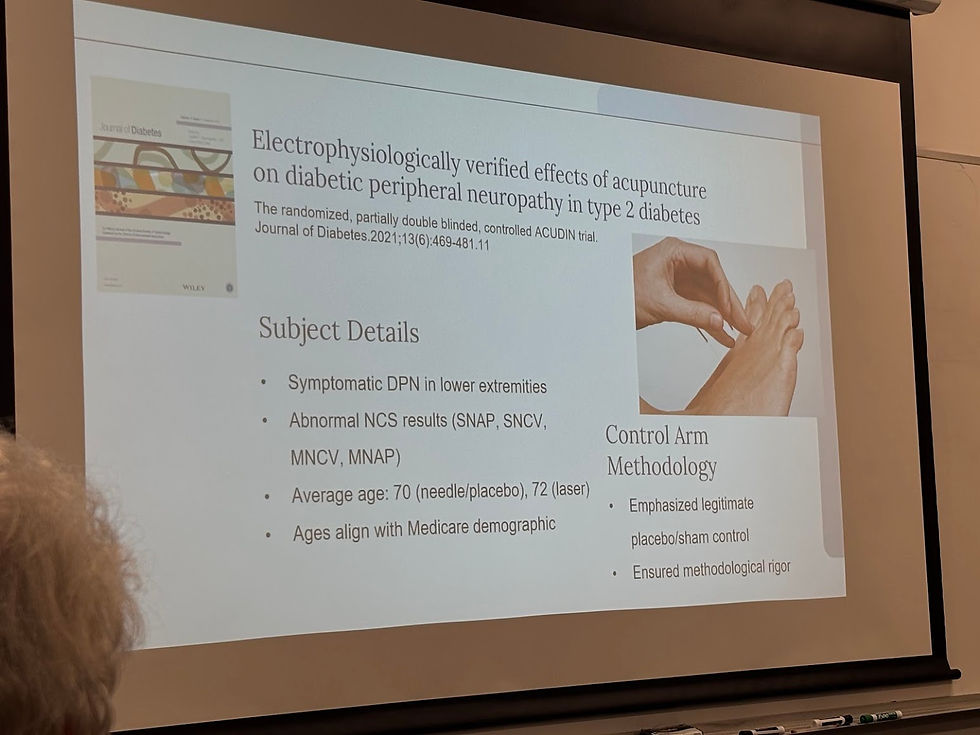
For years, the acupuncture community has been frustrated by studies that “disprove” our medicine because of the poor structure of those studies. They had a small sample size, or chose strange points that made no sense to most acupuncturists. In some cases, they used acupressure as a "placebo," then claimed because both groups improved, acupuncture was no better than placebo! This class focused on a series of well-designed studies that followed strict protocols to get objective results, including improvement in pain levels, nerve conduction, and mobility.
Recovery shows three phases:
1) Beginning changes. Pain and tingling start to decrease. At this point, numb nerves can start causing pain as they start reporting to the brain again, similar to the "pins & needles" when your leg falls asleep and then blood flow / nerve transmission is restored. This is generally a short-lived irritation that continues to improve to normal nerve function.
2) Maximum benefit: Changes plateau at the best possible outcome for that patient. This may be full recovery, or there may be residual damage.
3) Maintenance. This is not necessary if the damage is no longer being done, but if chemo is ongoing, or diabetes is still present, tuneup treatments are likely to be required.
In one particularly infuriating study, a short-term course of acupuncture was terminated in phase one, when numbness had started healing and pain had started. The conclusion reached by (non-acupuncturist) researchers was that acupuncture should not be performed. If only they had kept going!
The 2007 European Journal of Neurology study (linked below) showed that peripheral neuropathy treatment is dose-dependent: One session is not likely to create lasting change, but 12 sessions over 8 weeks created a 75% rate of improvement over placebo. When analyzing older studies, if low-dose examples are eliminated from the pool, the percentage of studies with good results skyrockets.

The great news is that the protocols studied are nearly identical to the ones I developed myself. With some minor tweaks, I can deliver evidence-based care that’s scientifically proven to work.

Links for further reading (studies listed in order by date):
Poney Chiang, researcher and professor and his website Neuro-meridian
Acupuncture treatment improves nerve conduction in peripheral neuropathy. European Journal of Neurology, 2007 Mar;14(3):276-81.


Comments